GUIDE — generator nameplate / kW label close-up
SIZING
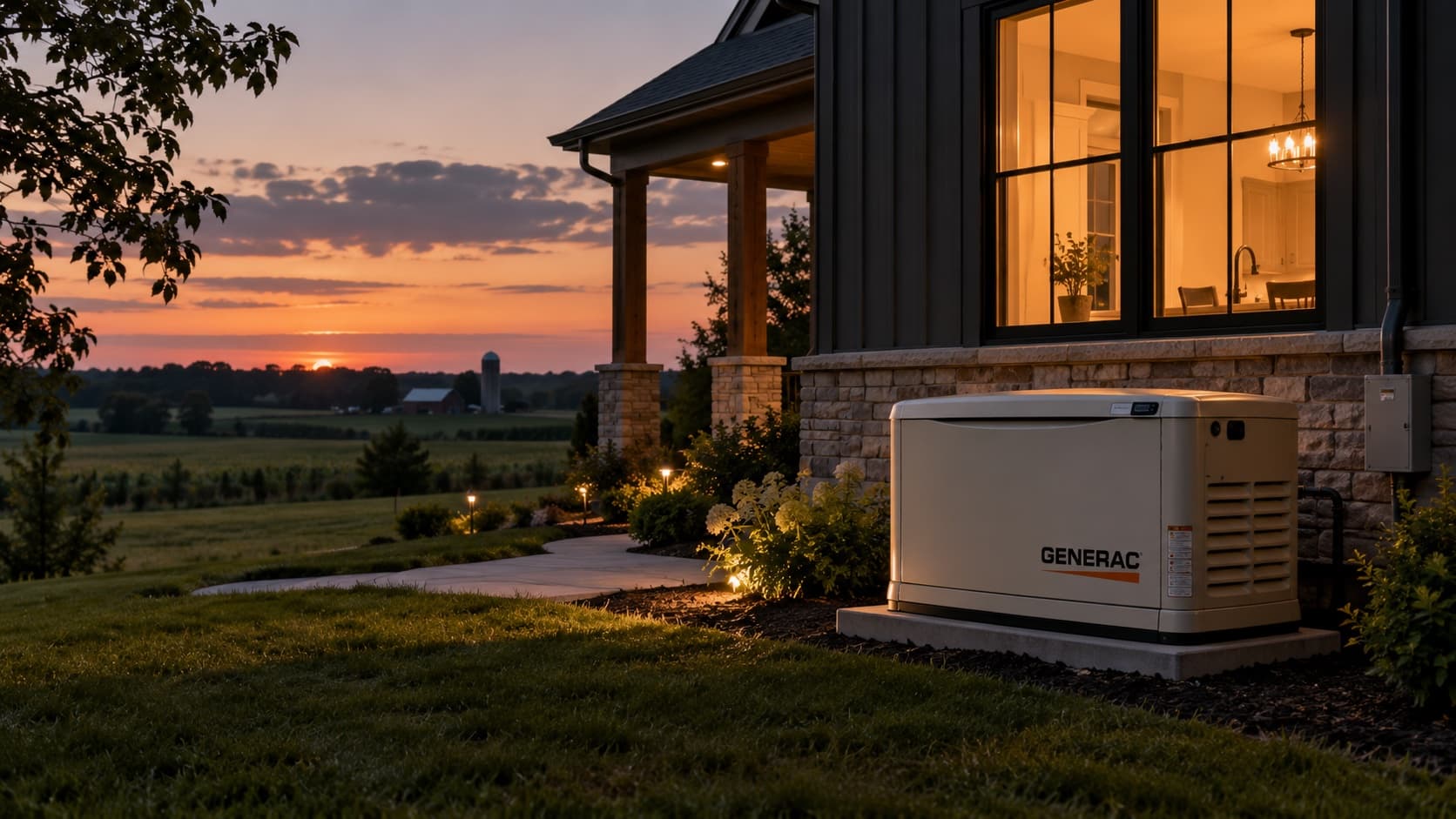
Never worry about the power going out again.
Standby generator installation for homes across Norfolk County. Get dependable backup power that turns on automatically when the grid goes down.
Serving Simcoe, Delhi, Waterford, Port Dover, Port Rowan & surrounding Norfolk County.
A backup generator in Norfolk County, Ontario is not a luxury item — it is the difference between an inconvenient evening and a real problem. Outages here are rarely brief. Storms come off Lake Erie, ice takes down long rural feeder lines, and restoration crews work outward from the towns, so properties between Simcoe, Delhi, Waterford, Port Dover and Port Rowan are often the last to come back on.
When the power drops on a rural property, it takes more than the lights. Homes on a well lose water. Basements lose the sump pump. Furnaces stop, freezers thaw, and internet and phone service go with them. A permanently installed standby generator removes all of that from your list: it detects the outage, starts on its own and transfers the house over within seconds, running on natural gas or propane with no cords, no fuel runs and nobody standing outside in the weather.
Norfolk Generators focuses on one thing — standby generator installation for homes across Norfolk County. That means sizing the unit to your actual electrical load, choosing whole-home or essential-circuit coverage, handling fuel and transfer-switch work, and filing the electrical permit and inspection Ontario requires. Tell us about your property and what you want to keep powered, and you get a quote written for your home rather than a number pulled off a brochure.
Your price depends on the home. There is no single number that is honest for every property — these are the variables that set it.
Square footage and total electrical load.
Kilowatt rating needed for your setup.
Available fuel and line work required.
Panel capacity, age and transfer switch.
Everything, or the systems that matter most.
Distance from panel, meter and pad work.
Tell us a little about your property and what you want to keep powered.
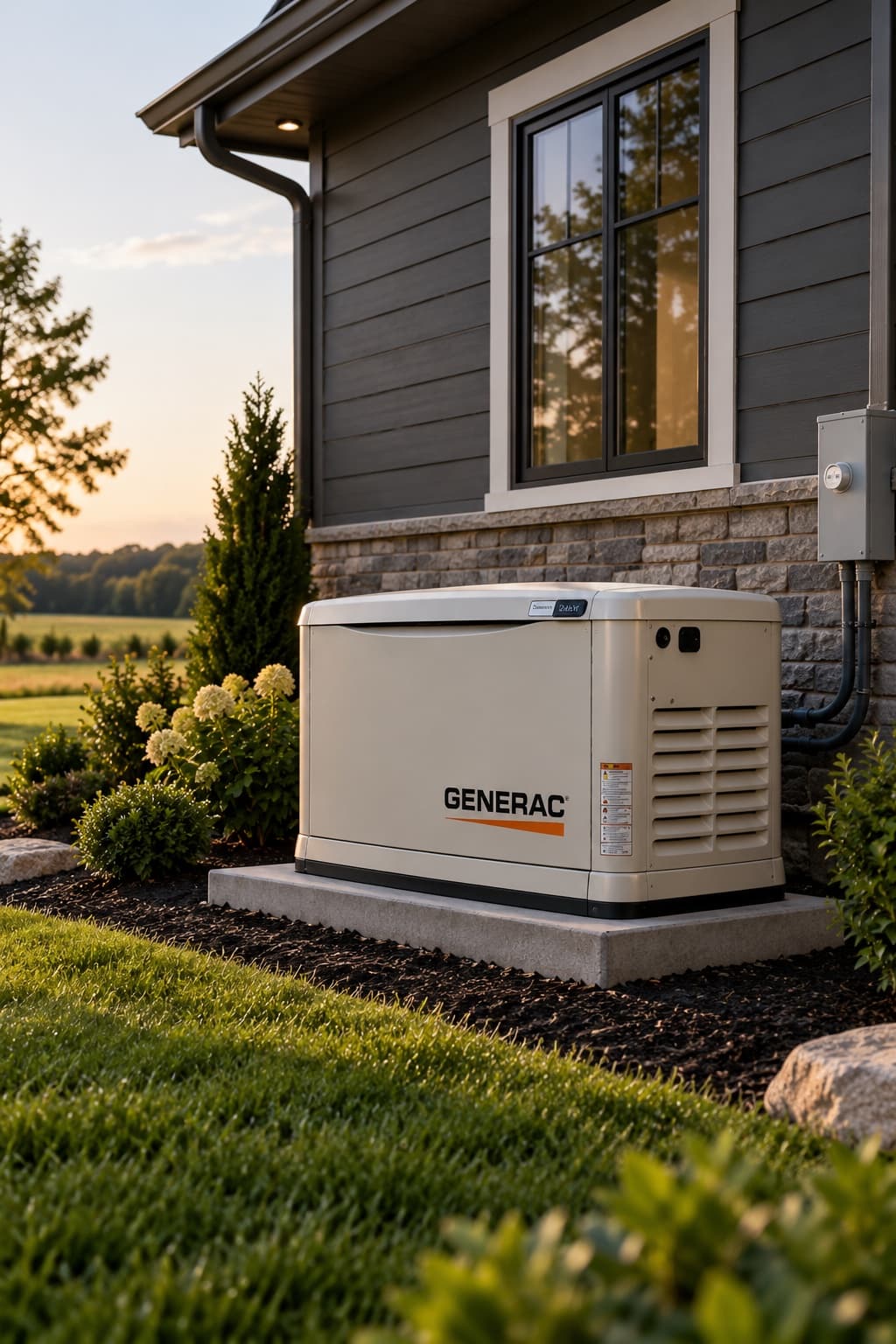
A permanently installed standby generator detects an outage automatically. Within seconds, backup power is supplied to your home without extension cords, refuelling or dragging a portable generator outside.
Keep your furnace running.
Keep your well pump operating.
Protect your basement.
Keep food from spoiling.
Stay connected.
Keep life running normally.

Storms roll off the lake, lines run long between rural properties, and an outage here rarely lasts minutes. Homes on wells lose water. Basements lose sump pumps. Farms and shops lose everything at once.
Backup power in Norfolk County is sized for that reality — not for a downtown condo.

The county seat, with older neighbourhoods, mature tree cover and overhead lines that come down in ice and wind. Most Simcoe homes have natural gas available, which makes whole-home standby coverage straightforward.
GENERATOR INSTALLATION →A mix of in-town homes and surrounding farm properties. Inside town limits gas is usually the fuel; on the concessions around Delhi, propane and larger loads for shops and outbuildings are common.
GENERATOR INSTALLATION →Ponds, low-lying lots and a lot of homes that depend on a sump pump staying on. Sizing here usually starts with the pump and furnace before anything else gets added to the list.
GENERATOR INSTALLATION →Lake Erie weather hits here first, and winter wind events take lines down along the shore. Year-round homes and cottages both benefit from a unit that starts itself while nobody is home.
GENERATOR INSTALLATION →At the south end of the county, feeder lines are long and restoration takes the longest. Propane is the usual fuel, and whole-home coverage is a practical choice for properties on a well.
GENERATOR INSTALLATION →Wells, septic systems, sump pumps, freezers, shops and barns — all on one outage. Rural installs are sized for high-starting-draw loads and often run on a propane tank already on the property.
GENERATOR INSTALLATION →A few quick details about your property and backup power needs.
Generator size, fuel source and what you want powered.
Receive pricing for your installation.
Your standby generator automatically takes over during outages.
The questions Norfolk County homeowners ask before they buy.
Installed cost depends on the home: generator size, fuel source, electrical service, whether you want whole-home or essential circuits, and how far the unit sits from your panel and meter. Those variables move the number substantially, so pricing is quoted per property rather than advertised as one figure.
Sizing is based on total electrical load, not square footage alone. Well pumps, electric water heaters, central air and electric ranges have a large starting draw and often decide the kilowatt rating. A load review of your panel determines the right size.
It can. Whole-home coverage powers everything on the panel, while an essential-circuits setup powers a selected list — furnace, well pump, sump pump, fridge, internet — at a lower cost.
Homes on a natural gas line usually run on gas, with no refuelling and no tank. Rural properties without a gas line run on propane, which needs an appropriately sized tank and a supply contract.
Most residential installations take one to two days on site once the pad, fuel line and transfer switch work are scheduled together. Permits, inspection and equipment availability set the overall timeline.
Yes. Generator work involves electrical connections that must be filed and inspected by the Electrical Safety Authority, and gas or propane connections must be made by a licensed gas technician. Municipal rules can also apply to the pad and setbacks.
An automatic transfer switch monitors the utility supply. When it detects an outage it starts the generator and transfers the house over, typically within seconds, then switches back and shuts the unit down when utility power returns.
Yes — in rural Norfolk County these are usually the first two circuits homeowners protect. Both draw heavily on start-up, so they need to be accounted for when the generator is sized.
Standby units self-test on a schedule and need routine service roughly once a year or by running hours — oil, filters, plugs, battery and a load check. Skipped maintenance is the most common reason a generator fails during an outage.
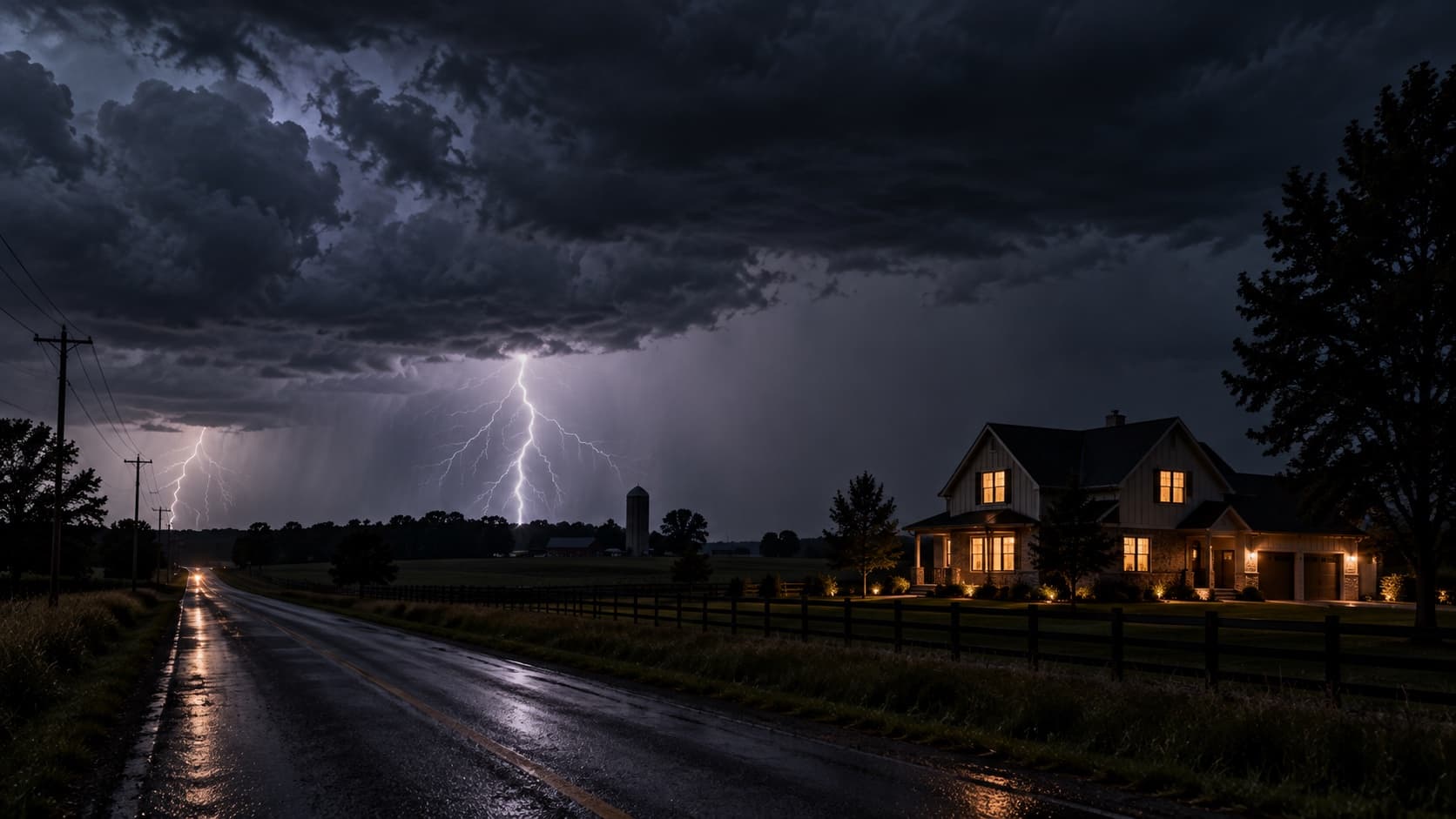
Make sure your home is ready for it.
Serving homeowners throughout Norfolk County.